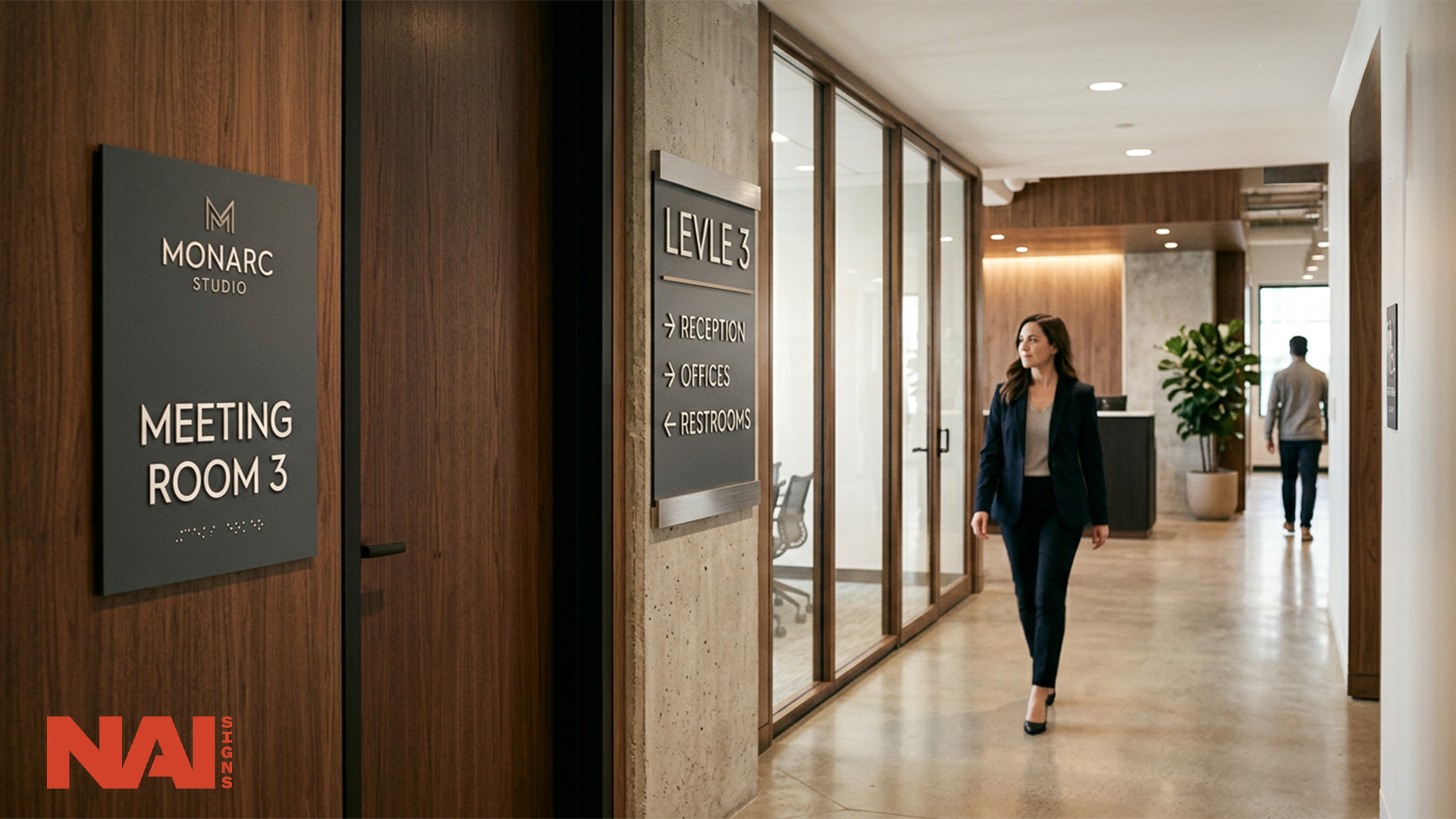
In modern spaces, be it a healthcare facility, hotels, school, or any public venue, accessibility is not something you put on the back burner. It is woven into the very fabric of the user experience. ADA Signage is essential to give every visitor the confidence and independence to make their way around.
And yet, there is no need to sacrifice a good design for the sake of compliance. The best contemporary signs are as much about visual appeal as they are functional clarity; they fit right in with the surroundings and add to the branding and aesthetic of the place.
At NAI Signs, we craft exceptional accessible signs that are visually compelling and fully compliant with regulations. In this blog, we will get into the evolution of ADA-compliant signs and what makes a contemporary design work, showing you how the right approach can do more than just meet requirements; it can raise the standard of your brand identity and the overall experience for your users.
The Importance of ADA Signage in Modern Spaces
There is more to accessible signage than just meeting the law. For a brand, it is an indication of how much you value inclusivity and the finer details. When done right, ADA signage will:
- Provide clear navigation so your visitors are not left to guess where they are going, which goes a long way in avoiding any confusion or frustration.
- Bolster safety with good placement and tactile features that heighten awareness if an emergency arises.
- Reinforce your brand with the right mix of materials, finishes and fonts that speak to who you are as an organization.
Well-crafted ADA signs make your space professional and welcoming. It keeps things compliant and pleases your visitors while cutting down on operational friction.
The Key Principles of Modern ADA Signs
There is more to designing ADA-compliant signs these days than simply ticking the boxes for code compliance. The modern approach takes into account everything from visual hierarchy and tactile readability to how well it fits aesthetically. Here are some of the guiding principles:
Tactile Elements and Braille
With raised lettering, a visually impaired user can get by with confidence.
High Contrast and Legibility
Rely on good color contrast and uncluttered fonts so any visitor can read the sign without trouble.
Proper Placement
For better usability, you want your signs at decision points and at a uniform height.
Material Selection
There is no substitute for quality. Durable materials such as acrylic or metal will stand to the test of time and add to the design.
When you put these elements together, ADA signs do more than satisfy accessibility standards; it conveys a sense of professionalism and care for the user.
Integrating ADA-Compliant Signs with Interior Design
When it comes to interior design, modern ADA signage is not something you treat as an afterthought. It is woven into the architecture so that accessibility is a natural part of the space, not something imposed on it.
At NAI Signs, we take this approach. Our work is about:
Putting the Brand First
We select materials, textures, and colors that are in keeping with your corporate identity and the room’s finishes.
Working with the architecture
The signage is in keeping with the door frames, walls, and any directional cues to give the area better flow.
Making navigation intuitive
Our signs will lead people where they need to go without cluttering up the visual environment.
By integrating the two, we turn what could be a mere functional requirement for ADA compliance into a well-rounded design feature. It is good for the user experience and reinforces your brand.
Material Innovation & Durability
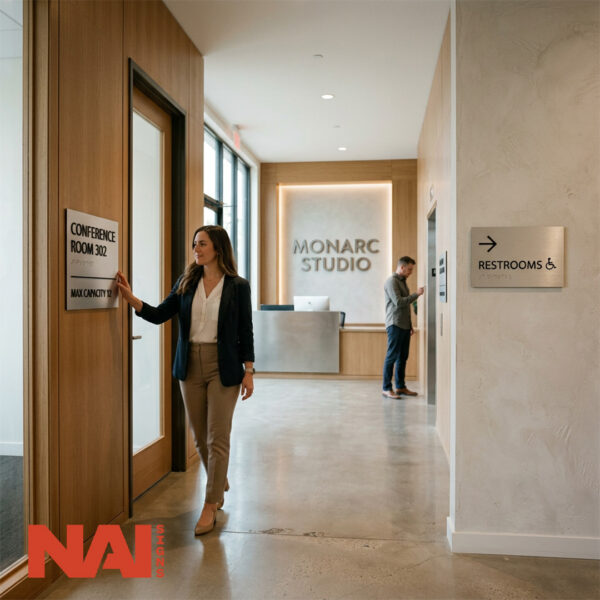
Durability is an important factor when you are considering ADA signs. These signs have to withstand constant use and exterior conditions. Contemporary designs are all about material innovation, and to meet that standard. You will find premium options with an eye for detail:
- Corrosion-resistant metals
- Acrylics to put an end to glare
- High-impact plastics that stand up to wear on tactile surfaces
- Eco-friendly materials for those who want to be sustainable and responsible
It is more than just reliable performance; these are the kinds of choices that make your signage fit right into the space while delivering a solid return on investment over time.
How ADA Signage Shapes the Visitor Experience
ADA signage has a direct bearing on the way visitors see and use a space. When you put some thought into the design, it can do more than just point the way; it can:
- Take the pressure off your staff to act as navigators
- Make for a less stressful visit for those with disabilities
- Boost brand perception and general satisfaction
When you incorporate accessible signs into a broader environmental plan, you are putting in place an inclusive and intuitive environment. It is an aesthetic choice that speaks to the whole experience and one that will not be easily forgotten by your visitors.
Conclusion
Modern ADA signage is where good design and accessibility come together. It makes for a space that is not only inclusive and easy to get around in but also visually striking. With the use of premium materials, high-contrast graphics, and tactile features, ADA signs can offer a seamless experience that speaks to your brand’s professionalism and shows you are committed to every visitor. At NAI Signs, we see your project from expert design to fabrication and installation. The result is an impression of your brand that is clear, durable, and hard to forget.
Do you want to elevate your space and make a lasting impact?
Get in touch with us today to design and install ADA signs that leave a lasting impression on the visitors.