
When you go into a new building, you immediately notice if anyone considers how it was constructed. Certain spaces are bare, but others speak, through little, worthwhile features such as patterned walls, metal hanging from the ceiling, and the organization’s name etched into the material, all of which appear to be of the building. These aren’t items added, later, they are bespoke signage solutions, and having once seen them, the standard, uninteresting signs simply disappear from view. What ‘custom’ really signifies is not merely the use of something straightforward, picked from a list of products.
Rather, it means forming something altogether original, produced for a precise brand, site and mood. Companies are starting to realize that the setting about them can tell people a great deal regarding what the company is, and the quality of the signs defines what the location communicates.
This article will look at why ‘custom’ is what every brand looks to be different, known, and genuine in a world of uniformity is employing.
Table of Contents:
- When Standard Signs Fall Flat and Bespoke Signs Take Over
- What Bespoke Really Means: Building A Sign That Didn’t Exist Before
- The Soul of a Space: Why Bespoke Fits Where Standard Fails
- Materials That Speak: Wood, Metal, Light, And Everything In Between
- Designing For Emotion, Not Just Direction
- Where Art Meets Function: The Genius Behind Custom Build
- Branding Reimagined: When A Sign Becomes a Handshake
- Behind The Scenes: Where Ideas Become Physical Reality
- Final Thoughts
- FAQs
When Standard Signs Fall Flat and Bespoke Signs Take Over
Famous standard signs are good at their job, but they never really feel like part of the building. On the other hand, bespoke signage becomes part of the architectural fabric and feels completely natural. And when something feels like it belongs, we trust it more.
What Bespoke Really Means: Building A Sign That Didn’t Exist Before
One of the main principles of bespoke is taking a brand’s personality, story, and identity into account, and planning a sign that didn’t exist previously. Grappling with this idea, you see that the process starts before even using pencils or software, by questioning what the brand is all about.
Speaking of signage, some places have such a distinct character that standard signs just don’t fit. Well-known for their one-off, original builds, NAI Signs sees their signs as something that’s been tailored to fit one place like a custom suit and can be considered a sculpture that just happens to have a message.
The Soul of a Space: Why Bespoke Fits Where Standard Fails
Coming from a background where they don’t believe in versions, but rather, brand-new ideas, they delve into the essence of a space to create signage that’s at one with its surroundings and doesn’t cut through its story. They take into account the following:
- Angles
- Shadows
- People’s flow
- The general atmosphere
Thus, developing forms that feel born in that very space. Be it a suspended lighting fixture that mimics the brand’s mark, a wooden plaque with a hint of carving techniques, or the enormous sculptural pieces that don’t need words to get your attention.
When spaces and signs start to grow together, it’s something that we can all pick up on, and that’s what they call The Soul of a Space.
Materials That Speak: Wood, Metal, Light, And Everything In Between
When selecting materials, they think about cold-rolled steel, heavy, metallic, unpretentious, and wood, different, softer, and warmer. Acrylic is all over the place with light. Glass sends back an image of the world you’re looking at, and anything else seems to have its own personality. They make bespoke signs so that these materials become the storytellers that they need to be. Brands that want to stand out pick them because they match their vibe.
- Companies that care about the environment go for reclaimed wood
- High-tech companies are into brushed aluminum or edge-lit acrylic
- Hotels and restaurants prefer warm tones and plush textures
It’s not all about being tough; it’s about giving people something to feel, hold, and be present in.
Designing For Emotion, Not Just Direction
When putting ideas together, think of materials as ingredients that need to be combined with love and instinct. It’s not just about the functional aspect, it’s about the emotional experience you want to evoke, and getting people to walk closer, when creating a signage solution today.
Well-known techniques include:
- A soft glow behind raised letters that slows people down
- A carved line across a wall leading them gently to an entrance
- A sculpted form floating from a ceiling that can raise eyes upward and alter the way people stand
Emotion is in the design, and is basically the way we communicate, which is what we are all striving for, and brands that know this secure loyalty from their customers without even asking.
Where Art Meets Function: The Genius Behind Custom Build
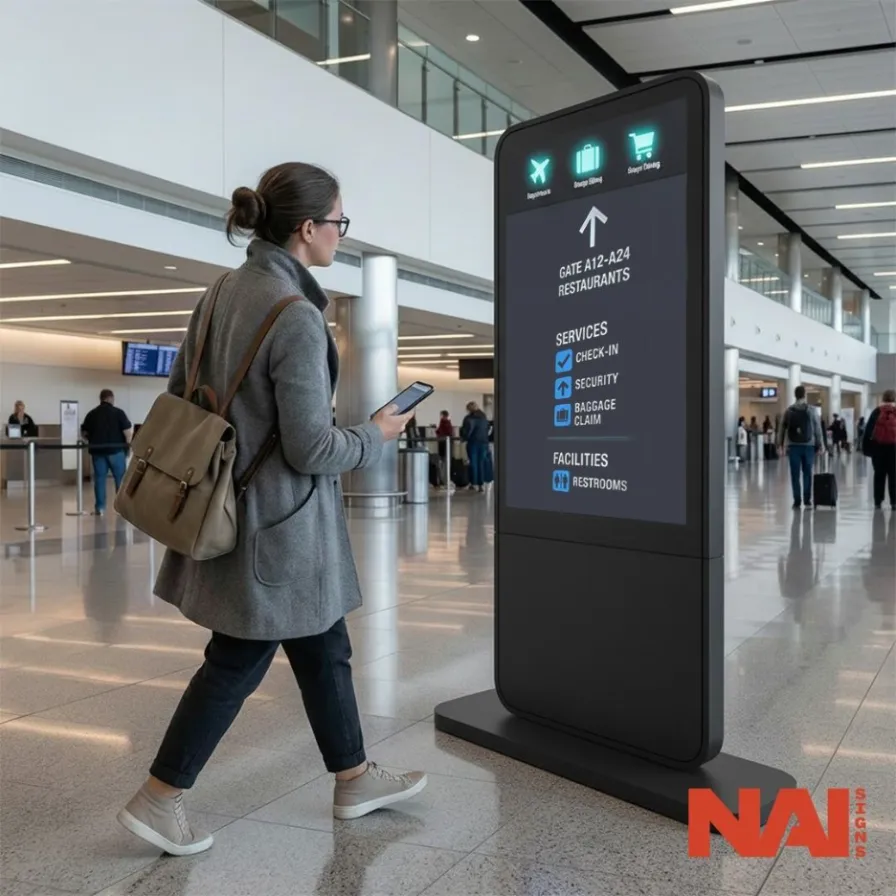
It is the essence of bespoke signage, which can be anything but impractical. These bespoke signs solve problems that mass-produced signs just can’t get nearby. They can be architectural, functional and beautiful all at the same time, and can contain innovative features like
- Floating panels that defy gravity but meet the necessary safety standards
- Lighting columns that double as way finders
- Sleek retail fixtures that hide unsightly wiring and technology in neat, elegant forms
Integrating perfectly with the building itself so that you can’t tell where the sign stops and the architecture takes over. Function should feel effortless, and when the design is correct, you don’t even notice the engineering that goes into it.
Branding Reimagined: When A Sign Becomes a Handshake
Reimagining branding is all about turning a sign into a personal handshake, and getting people hooked on the last place they visited, and it isn’t just the logo that sticks in their minds; it’s the feeling. Maybe it was the weight of a metal plaque on a reception desk, the clean contrast of black letters on white stone, or the ethereal glow of an edge-lit acrylic form. Those are not happenstance; they are elements of a bespoke signage plan, tailor-made for that brand, and that’s why you remember them. Branding has evolved beyond graphics, graphics alone, and is now:
- Physical
- Tactile
- Architectural
Behind The Scenes: Where Ideas Become Physical Reality
Coming from the drawing board to physical reality is the stage of the workshop. Here sparks fly; sawdust rises, heat, and precision are all part of the picture. The line between design and fabrication blurs, and designers, engineers, and craftspeople speak the same language when working on bespoke signage.
Cutting-edge CNC machines can precision-cut the edges of any shape. Welders can manipulate steel into a moldable, clay-like state, and painters build layers of color. There is no area where light doesn’t play a role, even in testing the glow of LEDs through different materials.
It is a skilled craft that’s composed of engineering precision, artistic flair, and gut intuition. NAI Signs takes great pride in its ability to transform rough sketches into something that will stay in the public mind, and with so much of its brand identity is built around exceptional results.
Final Thoughts
In terms of giving space to its personality, bespoke signage is essentially a guarantee. It turns dull corners into purposeful ones and makes walls feel vibrant, expertly guiding people through a space that they may not even be fully aware of. Coming from brands that don’t want to fade into the background, custom signs have a tendency to be part of the landscape and collective memory. NAI Signs designs and manufactures signs that are tailored to the specific building, atmosphere, and instant they are in, sending out a reassuring quiet confidence that lingers well after someone has left the building.
FAQs
What is bespoke signage?
Bespoke signage is custom signage created to work just for a specific brand, the area it is in, and the look it wants to achieve. It is made using intentional materials, forms, and designs to help it be noticed and show what the company stands for.
How does bespoke signage improve branding?
Branding is bettered by bespoke signage through the making of a powerful visual identity which is in keeping with what your company believes in; it gives a feeling to the area and makes a permanent effect on people who buy from you.
What materials are used in bespoke signage?
All types of materials are used for custom bespoke signage. Materials are selected to last, have a specific feel to them, and can show the nature of the brand.
How can bespoke signage affect customer experience?
Bespoke signage is able to change an area by leading customers easily, giving the area a tone, and making the surroundings seem to belong together, all of which improves the total experience and how the brand is seen.
Why should I choose bespoke signage over standard signs?
Unlike standard, ordinary signs, bespoke signage is made for your brand and space, making it truly one-of-a-kind atmopshere.