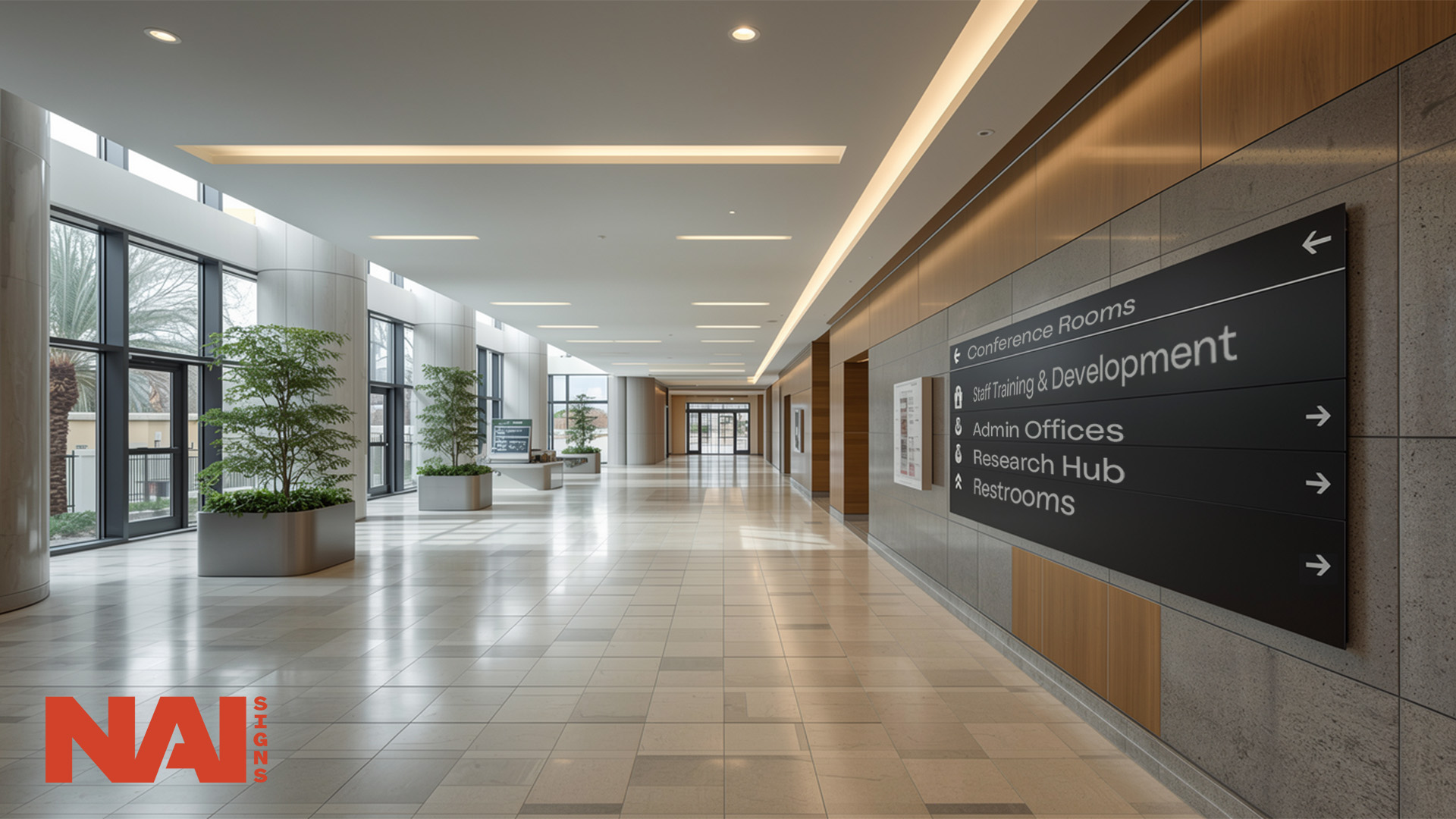
When you step into a well-designed corporate campus, hospital, retail space, or mixed-use development, you’re immediately clear on where to go, what the brand is about, and how the building works, even without asking for directions. However, these kinds of places are not a coincidence. It’s all because of the skills and expertise of the architectural sign industry, where signs, design, and building work together to create a smooth, cohesive experience.
Companies, hospitals, and property developers now no longer consider signs a secondary feature, but turn to them to sort out logistical problems, give their brands a boost, and ensure their customers leave happy.
In this guide, we’re going to take a closer look at how architectural sign companies like NAI Signs shape the world we live in, why they’re so important for businesses, and how finding the right partner can completely change your space.
Table of Contents
- How Architectural Sign Industries Transform Spaces, Brands & Experiences
- What Makes Architectural Sign Industries Different from Traditional Signage
- The Business Problems Signage Industries Are Built to Solve
- How Architectural Signage Companies Influence Human Behavior and Experience
- Core Solutions Delivered by Architectural Signage Providers
- Architectural Wayfinding Systems
- Brand-Integrated Architectural Signage
- Interior and Exterior Architectural Signage
- Fabrication, Installation, and Lifecycle Support
- Why Leading Organizations Choose Architectural Signage Providers
- Real-World Impact: When Architectural Sign Companies Get It Right
- How to Choose the Right Partner in the Architectural Sign Industries
- Architectural Sign Industries as a Long-Term Investment
- Conclusion
What Makes Architectural Sign Industries Different from Traditional Signage
When discussing signage, architectural sign industries differ from conventional sign companies, and they see signs as part of the total built environment; they’re designed right into the fabric of the building, not slapped on afterwards.
Well-known, traditional sign companies often focus on individual signs and short-term needs, whereas architectural sign companies think about the space from start to finish. How materials, interior and exterior elements, brand identity and graphics, and the way people move around can all be integrated.
One key aspect of architectural signage is starting by considering how people move through a particular building from entry to exit, and this is something that is different from more straightforward question such as ‘where to place the sign’, it’s something that sets up a building and brand identity.
The Business Problems Signage Industries Are Built to Solve
For signage, businesses often don’t realize the financial toll that disorienting visitors, inconsistent branding, disjointed spaces, safety and compliance issues take on their bottom line until it’s too late.
Well-known problems that the sign industries have been built to combat include the following:
- People getting flustered in big buildings and complexes
- Inconsistent brand identities at various locations
- Spaces that don’t feel cohesive or logical
- Communication failures that put lives at risk
These problems aren’t just superficial; they affect the efficiency of a space, how much people trust a place, and the revenue it generates. Signage solutions are made to get rid of obstacles, lead people through spaces, and boost confidence.
How Architectural Signage Companies Influence Human Behavior and Experiences
When creating spaces for people to navigate, the architectural sign industry has a profound impact on the way people interact with the world around them, using a fusion of environmental graphic design and wayfinding signage to make signs intuitive and logical.
Well-designed sign systems:
- Effectively and naturally guide people.
- Build brand identity, which is carried out through consistent visual language in this space.
- Retail and public spaces see an improvement in dwell time and user engagement because of the use of signage.
- Making spaces more accessible and inclusive is also facilitated through the thoughtful integration of sign designs.
By merging sign orientation with building and people’s psychology, architectural sign providers make spaces that “simply function well” and draw attention away from the signage itself, and let the consumer enjoy the experience.
Core Solutions Delivered by Architectural Signage Providers
For architectural sign manufacturers, their strength lies in providing holistic, end-to-end solutions rather than fragmented products.
Architectural Wayfinding Systems
Architectural wayfinding systems in hospitals, campuses and large corporate facilities help people navigate these environments. They are meticulously planned, mapped, and designed to grow as the facilities do.
Brand-Integrated Architectural Signage
Custom architectural signs tell brand stories and speak to brand values through their typography, lighting and positioning, and are not applied haphazardly.
Interior and Exterior Architectural Signage
The seamless experience of any facility can be achieved by ensuring a consistent look and feel, all the way from the exterior, inwards to signs, directories, and graphics.
Fabrication, Installation, and Lifecycle Support
Fabrication, fitting out and after-sales support are part of the total package that a skilled architectural sign company should deliver, ensuring the sign’s quality, longevity and coherence over time.
It’s really what sets these industries apart from more run-of-the-mill sign companies.
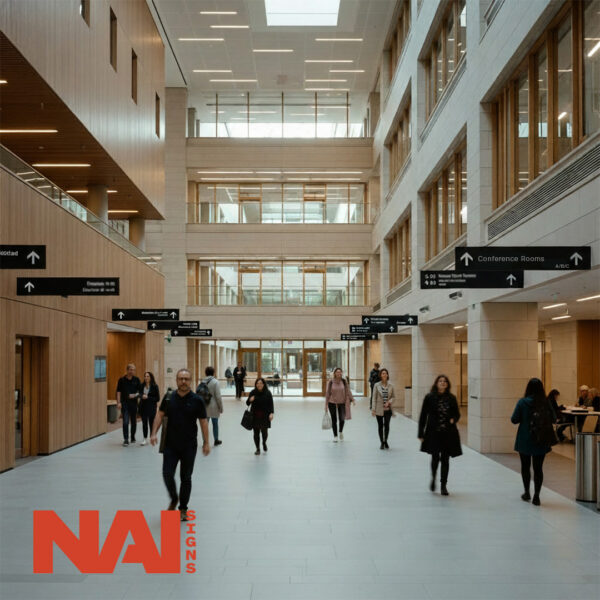
Why Leading Organizations Choose Architectural Signage Providers
When organizations need to elevate their brand identity, they turn to architectural sign firms. Known for their ability to excel in complex environments, these sign companies offer expertise in the following:
- Working hand-in-hand with architects and designers
- Large-scale or multi-location rollouts
- Deep understanding of materials, codes and regulations
- Consistency in branding, design, and execution
When a project is completed with a sign company that is capable of high-caliber performance, the impact is tangible and lasting.
Real-World Impact: When Architectural Sign Companies Get It Right
The results speak for themselves when your signage partner does its job well. Signage systems that have been thoughtfully designed and implemented show a real-life impact on the companies they serve.
- Navigation and visitor confusion are reduced as people find what they are looking for.
- Brand recognition and recall are greatly increased.
- Companies see the return on their investments.
- Operational efficiency skyrockets.
- Money is saved and brand recognition doesn’t fade easily.
Thus, the public gets a much stronger perception of the company’s brand, people essentially believe in what they’re seeing, and spaces become easier to use and remember.
How to Choose the Right Partner in the Architectural Sign Industry
If you’re looking for a reliable partner in the architectural sign industry, it’s not a guarantee that you’ll find someone with the level of expertise that you need to be successful in the long run.
Architectural sign providers should be:
- Able to tackle branded and architectural spaces.
- Have a strong in-house design, manufacturing, and installation setup.
- Be connected to architects and other decision-makers.
- Have a consistently impressive and large-scale portfolio.
- Must show a true understanding of the way signage is woven into the aesthetic of a building.
- Have an understanding of how architectural signage and sign systems operate within buildings.
Hence, people who specialize in only simple sign manufacturing have no comprehension of the intricacies of the total architectural scene.
Architectural Sign Industries as a Long-Term Investment
Looking at architectural signage, many people see it as a cost rather than an investment, but architectural sign industries can help companies reduce expenses in the long term by developing durable, adaptable and scalable signage.
Architectural pieces that are thoughtfully planned will reduce the need for expensive replacements and can be used to consistently convey brand identity as an organization grows, saving operational inefficiencies related to confusion. On top of that, signs can add value to property and boost customer happiness.
Conclusion
For modern spaces, we’re not just looking for signs; we’re seeking clarity, consistency, and a connection to the surroundings, and architectural signs deliver all that. With a brand-new building, renovating a current property, or synchronizing signs across multiple locations is a massive undertaking, but teaming up with a time-tested architectural sign company like NAI Signs will take the load off.
Are you ready to see the real transformation for yourself? Team up with signage specialists who live and breathe architecture, branding, and execution, and craft environments that are intuitive and brand-driven.