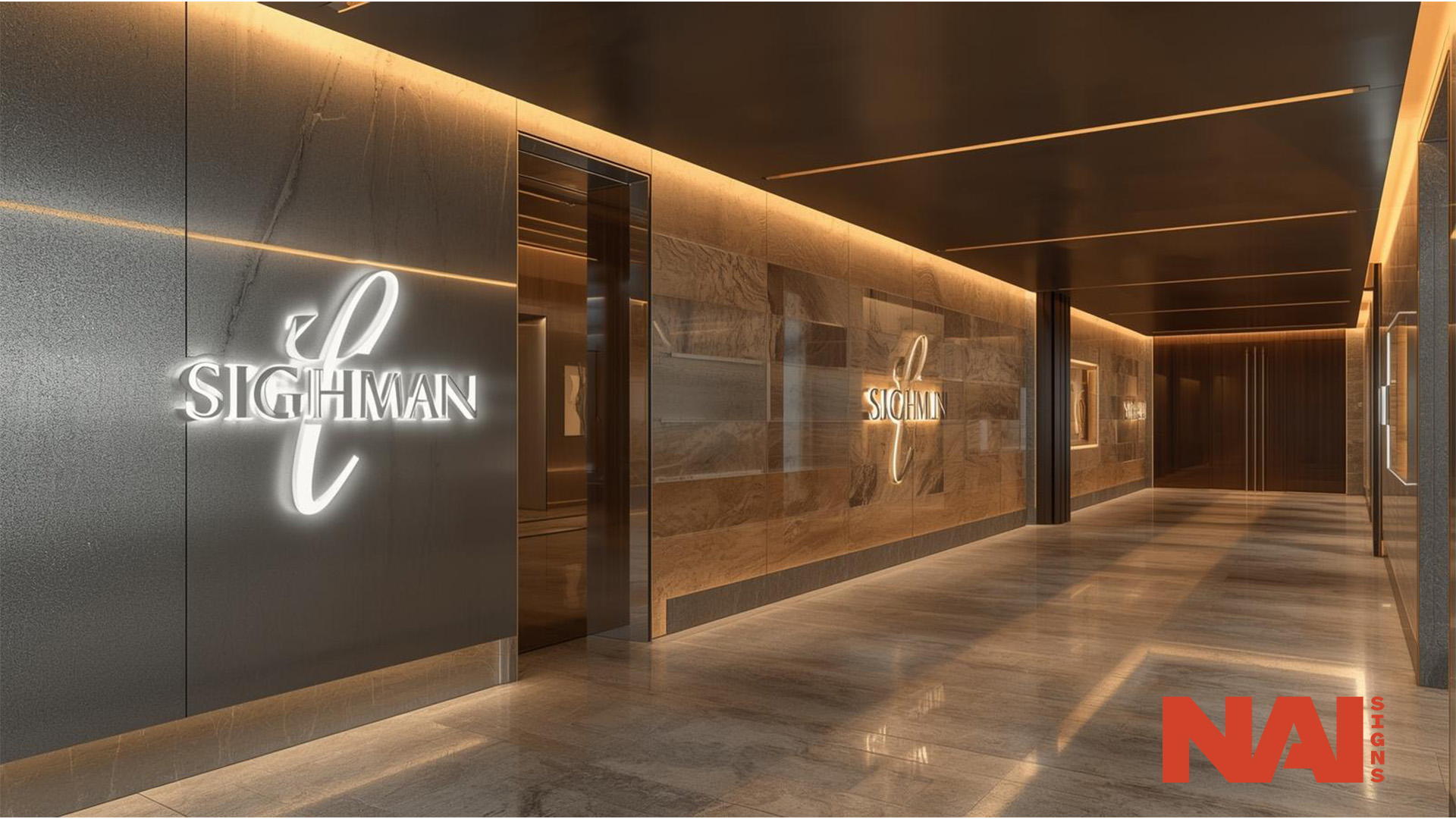
Architectural flair and brand recognition can be truly stunning, and the interiors have clearly been thought out; however, generic signage can be a letdown when you enter a modern building. This is where custom signage solutions come into play. If not, getting disoriented, asking for help, and skipping the things you’re looking for are the common results.
This failure of signage is not an architectural problem; it’s what happens when generic signs don’t do their job well. 2026 is a year that will make physical spaces truly evaluated on efficiency and usability, and this is why personalization of signage will be the norm for companies, institutions, and real estate developers who need their spaces to be on par with their aesthetic appeal.
Table of Contents:
- Why Custom Signage Solutions Matter More Than Ever in Modern Spaces
- The Real Problem: Spaces That Look Good but Don’t Function Well
- Why Traditional Signage No Longer Works in 2026
- What People Actually Need from Their Spaces Today
- How Custom Signage Solutions Solve Modern Space Challenges
- Redefining Spaces Through Custom Signage in 2026
- Signage as Architecture
- Wayfinding as Experience
- Branding in Physical Form
- The Cost of Ignoring Custom Signage Solutions
- The Long-Term Value of Custom Signage Solutions
- Wrapping It Up
The Real Problem: Spaces That Look Good but Don’t Function Well
When discussing signage, many organizations still fall short, treating it as a last-minute add-on in the planning process. The result is generic, off-the-shelf signage that technically does its job but fails to elevate the entire space.
Common issues include:
- Visitors getting disoriented
- Inconsistent branding in different areas
- Signs that require instructions instead of making things clear
- Signs clashing with the building’s architecture and decorations
Well-known problems like these won’t be tolerated anymore in 2026; people expect spaces to guide them effortlessly, communicate clearly, and to reinforce brand identity. If the signage fails in any of these tasks, it creates annoyance, and annoyance can ruin the experience, erode trust, and damage a brand’s reputation.
Why Traditional Signage No Longer Works in 2026
“Traditional” signage is for a very different time, where spaces were simpler, and people didn’t expect much from signage. Well-known static signs can still sort out the basic idea of a room or exit, but they aren’t cutting it in the dynamic, branded, and people-centered environments we have today.
Nowadays, we’re dealing with more intricate and multifunctional spaces that are designed with movement and experience in mind. Brand values should be communicated visually, but generic signage can’t really cut through the noise.
It’s no wonder generic signage can’t keep up with architectural changes, evolving layouts, and brand growth; that’s where custom signage solutions come into the picture.
What People Actually Need from Their Spaces Today
In contemporary times, when entering a space, people want:
- To immediately understand where they are, where they need to go, and what is around them.
- Crave visual cues that feel natural and organic, don’t over-communicate, and consistency in branding that builds trust.
- Buildings, spaces, and environments that feel intuitive and not confusing.
Beautifully designed signage is the key to cutting down uncertainty, getting rid of irritation, and generally sorting out the layout of a space. Custom signage solutions are made to understand what people really need, rather than forcing them to figure things out.
How Custom Signage Solutions Solve Modern Space Challenges
Custom signage solutions can’t be compared to generic signs. They are handcrafted to understand exactly how people move through and interact with the spaces they’re in, and aren’t slapped on at the end of a project; they’re part of the design from the start.
Features of bespoke signage include:
- A deep understanding of user behavior and journey mapping
- Blending in with the architecture of the space
- Alignment with brand identity and visual language
- The ability to evolve as the space changes
By addressing signage at a strategic level, custom signage solutions can dispel confusion and turn what was once difficult to navigate into a smooth and easy experience.
Redefining Spaces Through Custom Signage in 2026
Regarding signage, we’re no longer seeing it as something functional, but rather as a fusion of architecture and branding.
- Signage as Architecture
Signage now seamlessly blends into the walls, floors, lighting, and structures, coming across as well-considered, cohesive, and doesn’t stick out. Gone are the days of ugly signs that are awkwardly stuck to the side of buildings; they’re an integral part of the design.
- Wayfinding as Experience
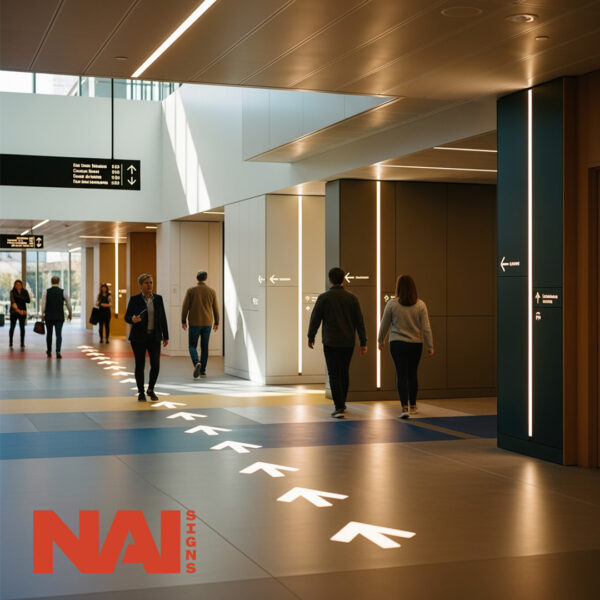
Wayfinding is no longer about arrows and instructions, but about gently guiding people through the use of color, spacing, and visual hierarchy, and signs really aren’t imposed.
- Branding in Physical Form
Branding in physical form, logos, typography, materials, and messages, is being brought to life in the real world, making brand identity unmistakable at every turn.
In 2026, signage isn’t just about communication; it’s about the very way a space is perceived.
The Cost of Ignoring Custom Signage Solutions
When deciding not to invest in custom signage, companies and organizations don’t see the immediate financial implications, but will certainly feel the sting of it, in the form of:
- Regular visitor confusion and complaints
- Over-reliance on employees to sort out directions
- Inconsistent brand representation
- Pricey redesigns and replacements
Generic signs may be cheaper in the short term, but they don’t let brands evolve or make any adjustments to their design. Bespoke signs are built to grow with the space and, as a result, save on long-term costs and logistical headaches.
The Long-Term Value of Custom Signage Solutions
When investing in custom signage solutions, the return on investment can be measured well beyond just its aesthetic appeal. Strategically, custom signage can have a huge long-term value for businesses, including the following:
- A stronger brand recall
- Improved user experience
- Higher user satisfaction
- Reduced rework and replacements
Businesses that invest in custom signage aren’t just improving the navigation for their physical space; they are creating environments that meet goals and people’s needs.
Wrapping It Up
Considering the success of a space, design is just one part of the equation; how well it functions is what really matters. When the space is disorienting, disjointed, and not functioning optimally, signage is often the solution that can clear the air. Custom signage solutions bridge the gap between architecture, branding, and experience and turn a space into a place that is both intuitive and captivating. Well-known generic signage is, in fact, boring and uninspiring. It’s time to question how signage functions in a particular space, and you’ll want to choose something clear, confident, and constant.